

The college football season is just eight days away, but the drama hasn't waited until Week 0 to begin. On Friday, the 10th Circuit Court of Appeals granted the NCAA a stay of the Colorado District Court ruling in the Winse v. NCAA case that granted an injunction for the Class of 2022 athletes to receive a fifth year of eligibility, so long as they haven't signed a pro contract. Meaning the ruling has now been reversed.
To try and put it in as simple terms as possible, any athletes, like Indiana's Stephan Daley, who recently joined a college roster for the 2026-2027 athletic year, are now deemed ineligible, pending appeal. The only players who still have that fifth year are those listed as one of the 16 plaintiffs in the Louisiana case granted a TRO, allowing those who signed NFL contracts to return to college.
BREAKING: The Tenth Circuit has GRANTED the NCAA’s stay request in Wisne v. NCAA.
— Austin Massey (@austinmasseySBI) August 21, 2026
Judge Sweeney’s nationwide injunction is now stayed pending appeal, meaning qualifying Class of 2022 athletes lose its federal fifth-season protection for now. pic.twitter.com/i3ASE2TmHi
Players who also filed personal lawsuits against the NCAA, like Thomas Castellanos, are still eligible to use their fifth year. All in all, it is a real mess, as some players were already practicing with teams preparing for the 2026 season.
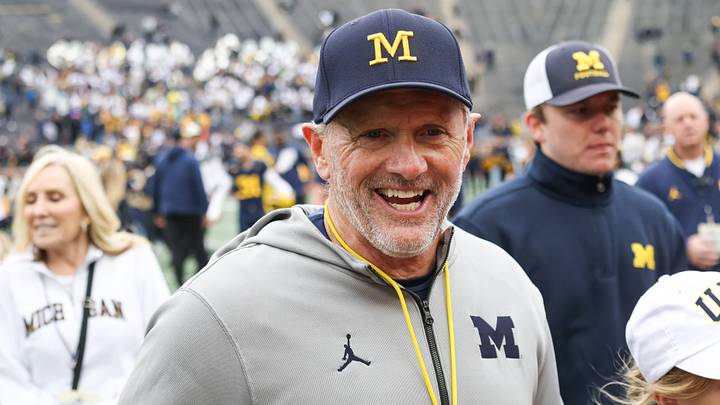
Kyle Whittingham adn Michigan has kept the fifth-year eligiblity drama at arms length
Throughout fall camp, head coach Kyle Whittingham has addressed the possibility of Michigan adding any players with the new eligibility ruling. The new Michigan head coach kept things simple, stating that the Wolverines didn't have any plans to bring anyone in, and now he looks like a genius for going that route.
Whittingham is already dealing with the typical struggle of coming into a new program, installing a new system, and, in Michigan's case, changing the culture around the program. While, sure, it would have been nice to bring back some experience to help with depth in struggling positions, like linebacker, when you really think about it, it's more of a headache to do so.
I myself at one point thought Whittingham shouldn't totally close the door on the possibility of adding a Class of 2022 player, but clearly the 66-year-old coach knew what he was doing. By making that choice, Whittingham has avoided the drama of the ruling reversal and the risk of drama in the locker room by bringing in another player to compete for snaps.
Even if Whittingham had brought someone in who once played for Michigan, it would have taken time for them to learn the new playbook in a new system, and there was no guarantee they would even see the field anyway.
The best way to avoid all this nonsense is to avoid bringing in any new players from the Class of 2022. Even though the reversal is pending appeal, this feels like a constant tug-of-war battle between the NCAA and 2022 athletes, not just in football but in all college sports.
 Add us as a preferred source on Google